Simeon Brown’s Nanny State
Health Minister Simeon Brown recently declined to reappoint the leadership of the Medical Council of New Zealand, claiming the body had become ‘increasingly distracted by politics instead of focusing on its core responsibilities of improving patient outcomes.’ The public catalyst for this intervention was a consultation document released in March containing draft statements on cultural safety and Hauora Māori – Māori health and wellbeing. Claiming the Council had become too focused on an ideological agenda, Brown echoed the complaints of ACT health spokesperson Todd Stephenson, who had argued the draft standards policed the personal opinions of clinicians, and populist lobby group Hobson’s Pledge, who want to purge the public service of perceived decolonisation ideologies.
What makes the context so intriguing is that the documents were not agreed-upon Medical Council policy. They were drafts out for feedback – two of a large number of issues the Council had been consulting on. They were also the proposed third version of a cultural competence standard that has existed for twenty years. It is a requirement under Section 118 of the Health Practitioners Competence Assurance Act that the Medical Council sets standards of cultural competence (including competencies that will enable effective and respectful interaction with Māori).
Putting drafts out for feedback on a statutory requirement is far from a crime. Professional standard setters in health and education test options with their stakeholders all the time. It’s how standards get refined. It’s good process, not headline news.
Medical leaders were triggered by Brown’s actions and comments. The Association of Salaried Medical Specialists and the New Zealand Resident Doctors’ Association condemned the move as a dangerous political overreach that violated the statutory independence of medical regulators.
The blow-up awakened the New Zealand Nurses Organisation who referred back to Brown’s actions between last September and this February, when he overhauled the Nursing Council board. They labelled Brown’s replacement of the most diverse, te Tiriti-led Nursing Council in history with corporate administrators as a strategic whitewash that slashed Māori representation down to the absolute statutory minimum.
The Death of the Guild
For Brown, cultural safety was not the target but the pretext. Not waiting for the Medical Council to announce the outcome of its feedback process, Brown was using the draft document to prepare the political ground for his ultimate prize: the newly introduced Health Practitioners Competence Assurance Amendment Bill. The Bill grants the Minister of Health the statutory power to command all 18 health regulatory boards to ‘give effect to Government policy,’ legally ending two decades of independent standard-setting. It is far reaching in granting the government directive powers on matters relevant to the policies of an authority; an administrative or organisational process of an authority; a procedure of an authority; or a scope of practice or a proposal for a scope of practice.
Prior to the original Health Practitioners Competence Assurance Act 2003, New Zealand’s health sector was governed by a patchwork of statutes that focused narrowly on reactive discipline after things went wrong, rather than ensuring continuous, proactive clinical and cultural competence. In 2003, the Labour-led government intervened to standardise the boards but explicitly left standard-setting in the hands of independent experts to ensure clinical safety and cultural competence, thereby maintaining the value of the traditional guild model the medical profession operates on. That independence had a material basis. The Medical Council is funded by practitioners through their annual fees, not by the taxpayer. The profession pays for its own regulation, and in return sets its own standards.
The current government operates on a different premise. Facing acute, politically damaging hospital waitlists and severe staff shortages, the government doesn’t trust the independent statutory bodies to self-police, instead viewing the regulation of the health workforce as something the political executive should be involved in. The 2026 legislation leaves clinical expertise with the practitionerbut dismantles peer-led independence over the parameters, pace, standards, training and priorities of the medical workforce. And it strips out cultural mandates.
The Great Conservative Paradox
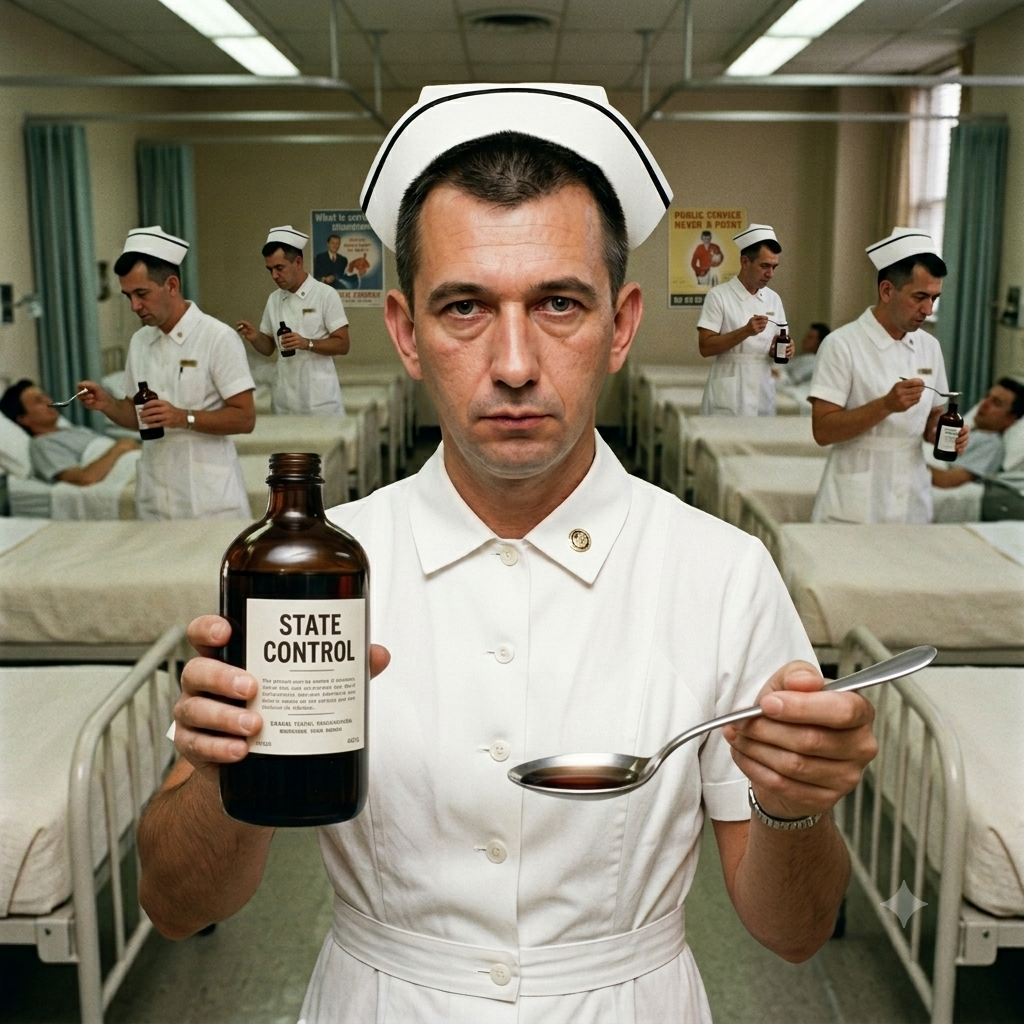
Herein lies the ultimate political irony. This centralising intervention comes from a centre-right, National-led coalition. For over 90 years, the conservative side of New Zealand politics has built its identity on free enterprise, local autonomy, and limited government intervention.Its standard line of attack on the left is the charge of the ‘Nanny State’ – heavy-handed central control over professional and local life.
Yet, in health regulation this government is deploying the same mechanism it has spent decades condemning. It transpires that small-state ideology holds firm only while independent institutions happen to agree with the Minister. When they do not, the remedy is total central control. This used to be labelled socialism. Today National brands it as ‘fixing the basics.’
Executive micro-management
This operational takeover extends beyond the health sector. Barely a week passes without a National minister claiming the public service has failed them. In response, ministers are increasingly getting their hands stuck into micromanaging departmental operations, thinking they personally know better. To the current crop of ministers, maintaining the traditional Westminster barrier between governance and operations is of secondary importance to the need to show quick headline-ready results before the next election.
The desire to sacrifice long-term strategic governance for short-term operational wins has even been codified by the coalition in the recently passed the Public Service Amendment Act 2026. This Act has stripped away the explicit requirement for the public service to prioritise the long-term public interest and deleted the mandate to enable successive governments to implement policy. This has been replaced with a singular obligation to support the government – meaning the politicians currently in power – to execute its immediate agenda, shifting the institutional focus from permanent state stewardship to short-term executive compliance.
The broken pendulum
Four months ago, I wrote in a blog post that the electoral pendulum is broken – that we now lurch between governments in cycles too short for any of them to embed what they came to do. Ministerial over-reach is a symptom of this, despite the evidence showing it not working. National is finding it impossibly hard to crack the 30% voter support barrier in public opinion polls, suggesting voters are looking for more from National than micromanagement.
Simeon Brown has exposed the hollow core of modern New Zealand conservatism. What National is offering isn't deregulation, it isn't free enterprise, and it’s certainly not limited government intervention. Small wonder so many former National voters have peeled off to parties with a firmer spine. National has lost its ideological way.