Labour's real problem isn't policy. It's men.
Seven weeks out from the start of advance voting, nine weeks out from election day, the question forming around Labour isn't really about policy. It's why trust Labour, when they are asking voters to re-elect the same leader and team that lost only three years ago? What has really changed?
History isn’t on Labour’s side. Since the Labour/National divide began in 1938, Labour has never won government back after only one term in opposition. National has done it twice – after the 1957-60 and 1972-75 Labour governments. In 1975, National toppled Labour under a new leader, having dumped Jack Marshall for Robert Muldoon along the way. In 1960, National won back government under Keith Holyoake – the same leader who had lost in 1957. But Holyoake had only been Prime Minister for two months before losing that election, having taken over from an ailing Sid Holland. Labour is attempting something rarer – reclaiming power under a leader who lost after serving the best part of the 2023 election year as Prime Minister.
Time for an upgrade?
Commentators have spent much of the year frustrated that Labour hasn't set the agenda with bolder policy, translating into better poll results. That frustration is mostly a media construction. Journalism runs on novelty and conflict and commentators are keen for something fresh to dissect. Underpinning it is also an assumption about prospective voting – that voters apply the same optimistic thinking to a policy platform that leads them to buy a larger TV screen for a better viewing experience.
But prospective voting – choosing based on new policy and legislative promises – only works under specific conditions. Importantly, voters need to believe the promises will be kept. Where credibility is thin, where a party has broken big commitments before, where fiscal and coalition constraints are known to override election campaign sweeteners or are so far in the future to be meaningless to today’s worries, voters discount promises and fall back on past performance as their primary decision-making criteria.
Rear view mirror
This is called retrospective voting, and it dominates voter behaviour in New Zealand. With coalition arrangements only negotiated after an election, it’s impossible for any voter to know exactly who or what they are ultimately voting for under MMP. And so they look back – basing their vote on how well or poorly the incumbent government has managed the economy and then punishing or rewarding them for that.
In this context, Labour’s job isn't to excite so much as to look safe enough that dissatisfied voters feel they can switch without taking on unknown risk.
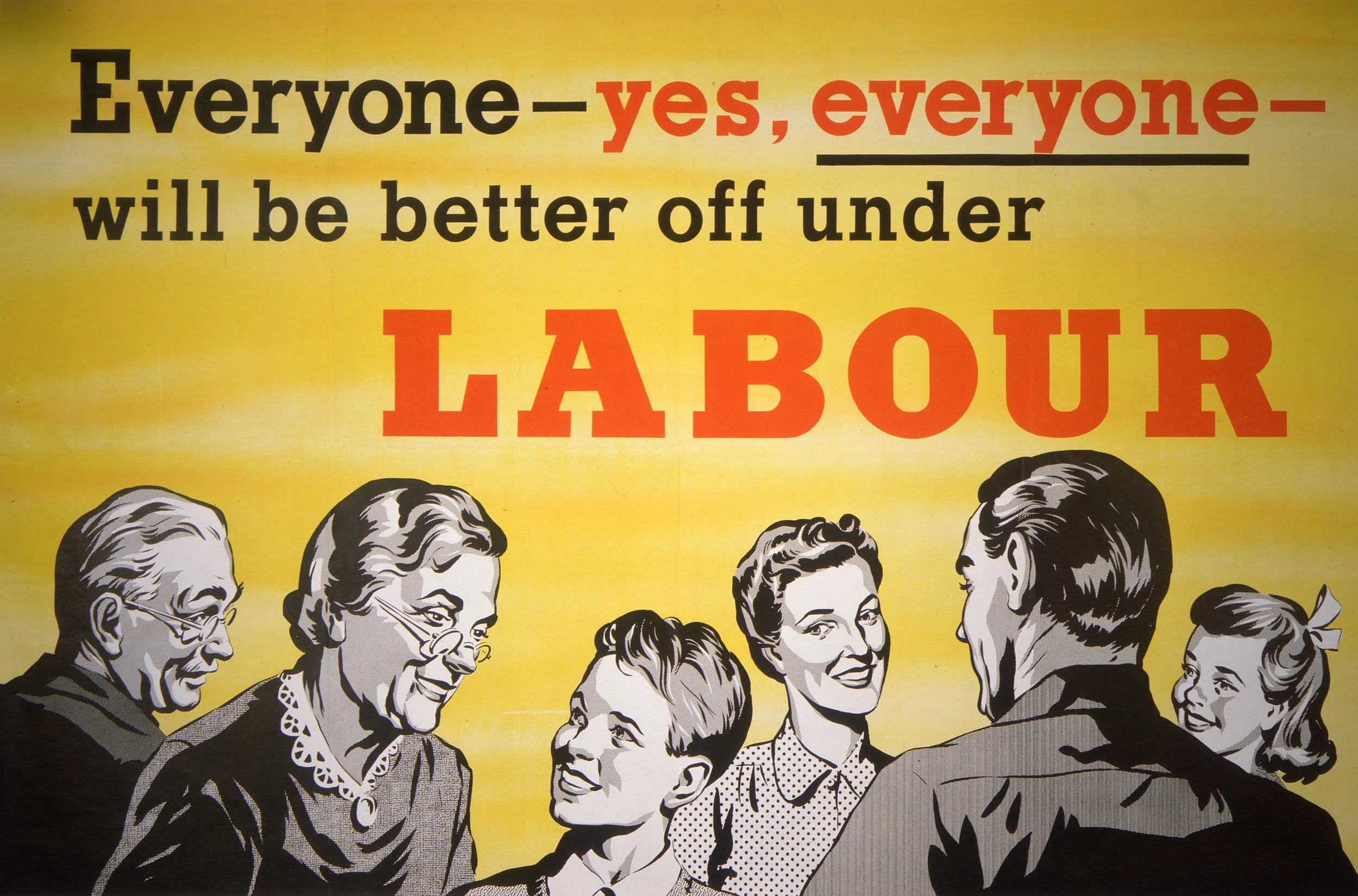
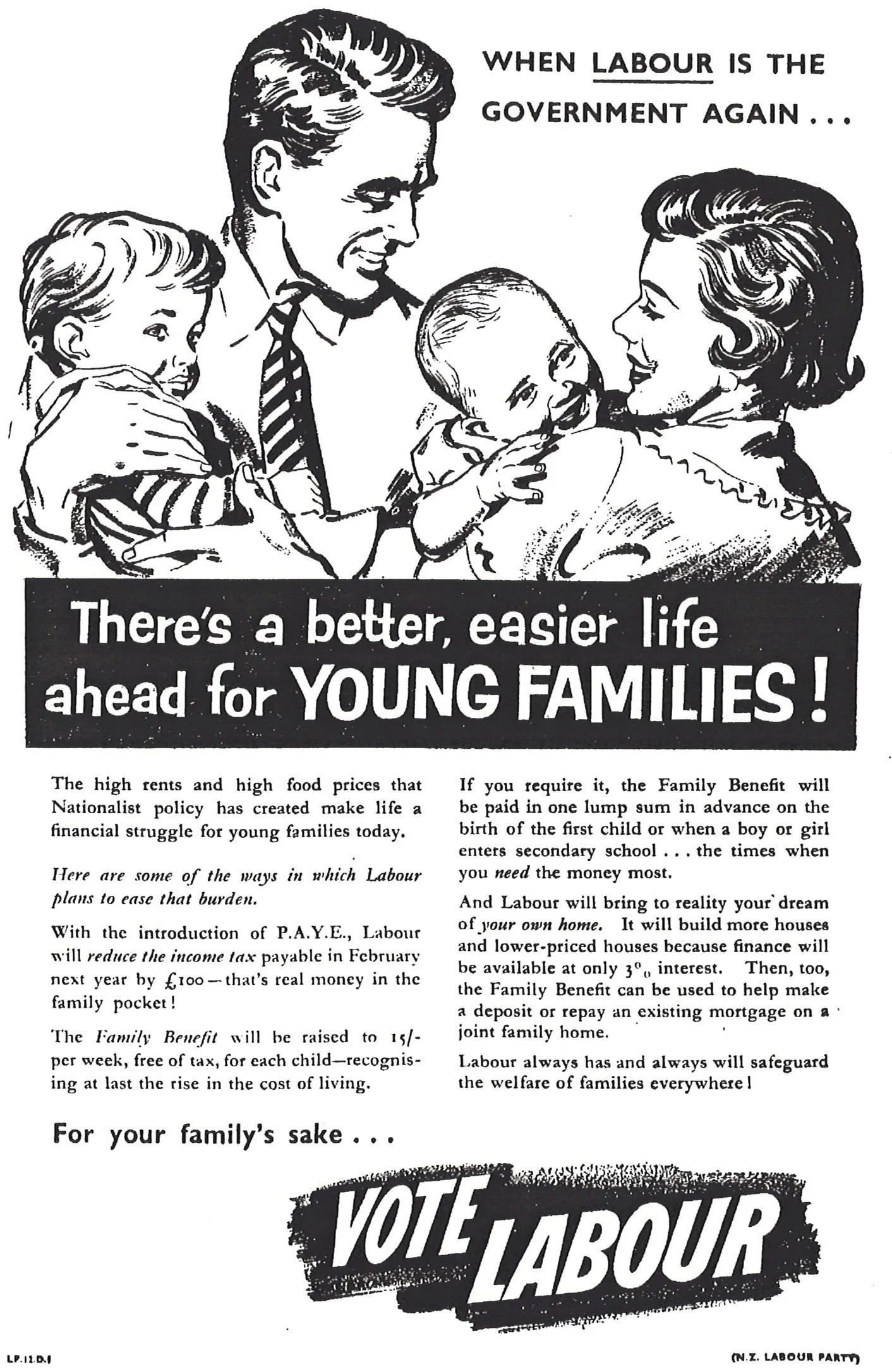
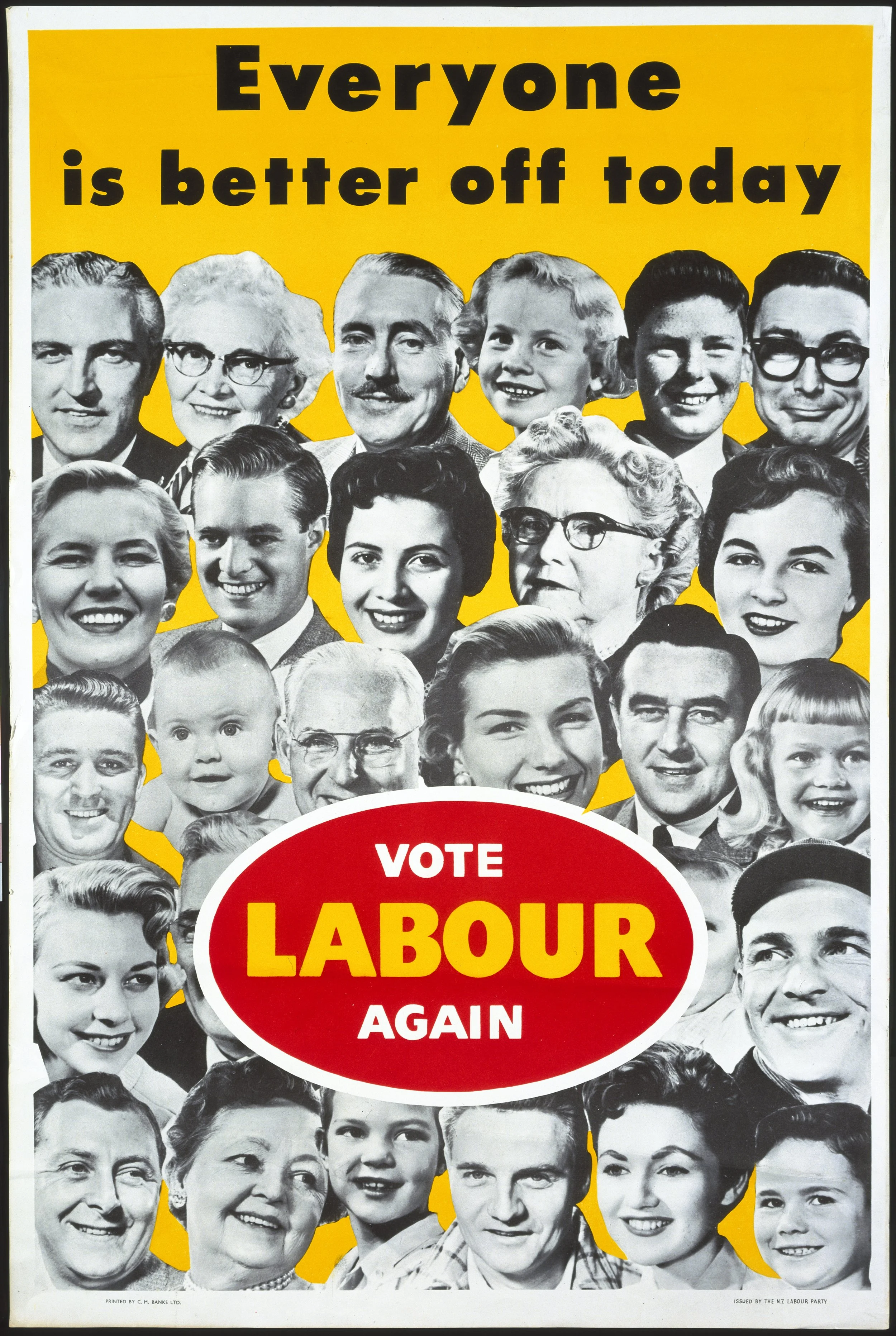
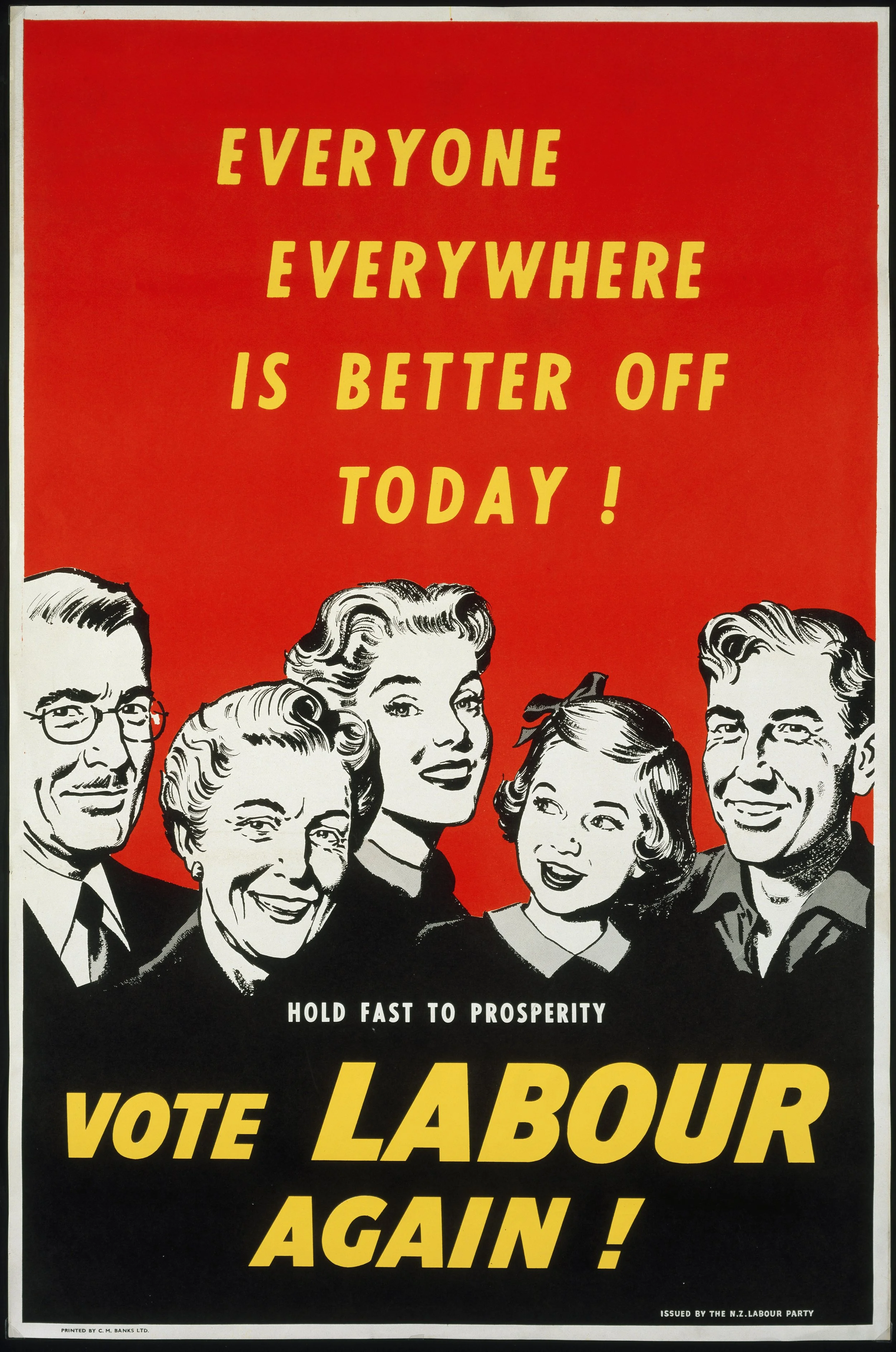
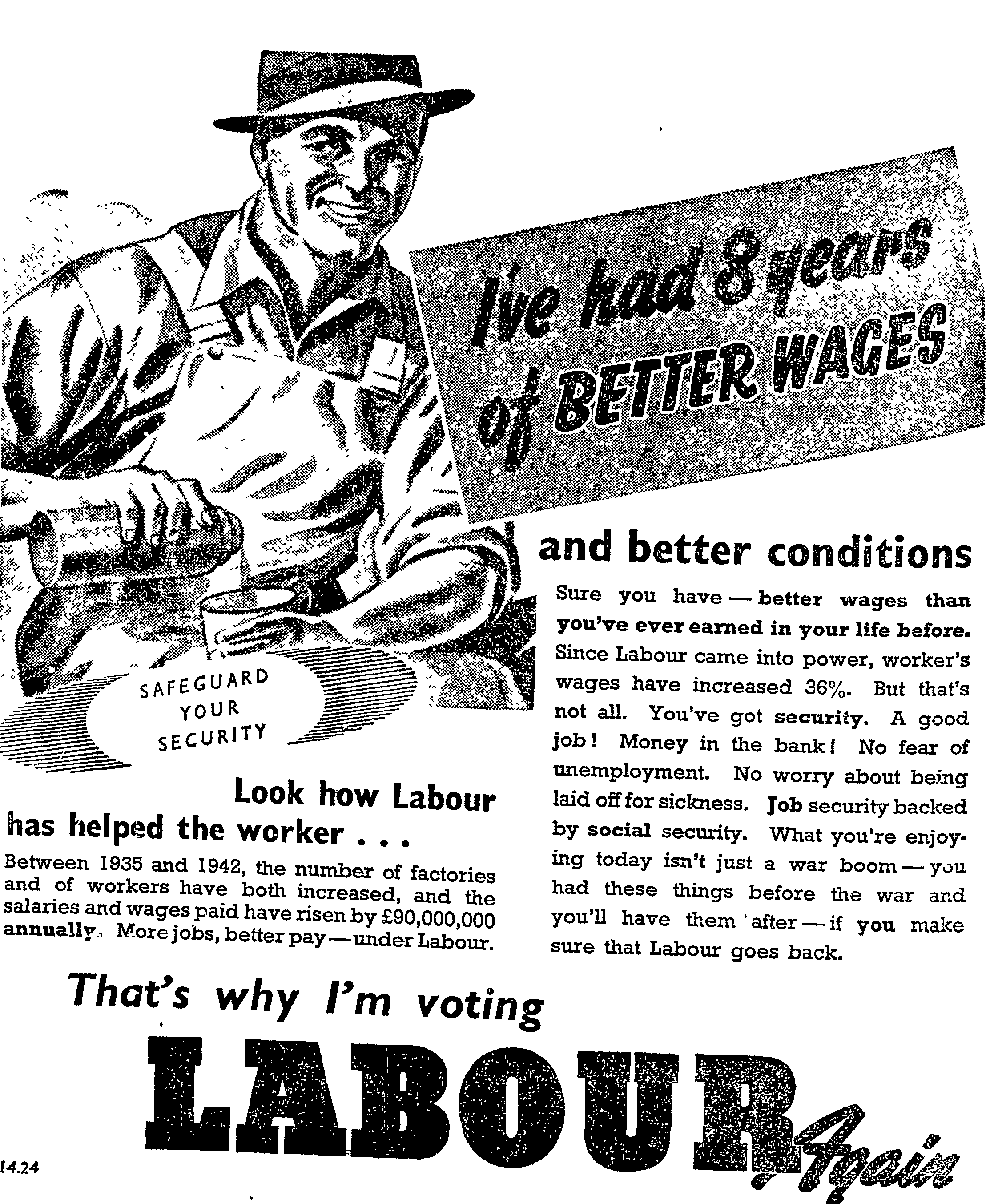
This approach is already visible in Labour’s campaign messaging, which focuses heavily on attacking the coalition government's vulnerabilities. There’s a hint of the prospective in its "Better Starts Now" slogan. Yet even then, there’s a nod to the known past in re-hashing the word ‘better’ – one of the more common campaign promises Labour has made over the decades (see below).
But mostly, Labour is trying to project a safe pair of hands. On rates caps, not taxing streamers, leaving the social media ban alone, there's not much daylight between Labour and National. Labour has pledged to maintain infrastructure investments made by the coalition, run with established resource management settings rather than triggering another wholesale rewrite, and avoid major structural reorganisations of public sector departments.
It's working, with women. It is not necessarily working with men.
Working for women
The Melbourne-based Roy Morgan poll is more of an outlier on the party vote than New Zealand’s domestic pollsters because it uses a different sampling methodology. However, its gender polling is more reliable at the aggregated level because sub-demographics like gender and age are straightforward to sample over longer field windows.
Its August polling shows that over twice as many men (58.5%) favour the National/ACT/NZ First coalition, against 27.5% for Labour/Greens/Te Pāti Māori.
Among younger men (aged 18–49), National leads Labour by 12 points (26.5% to 14%). ACT now sits at 17% with this group, up from 11.5% in July. The Opportunity Party draws 13% among younger men – the highest support of any cohort for the party – while the Greens also outpoll Labour in this category at 22% to 14%.
It’s only among younger women (aged 18–49) that Labour leads National (36% to 14.5%). In older women (50+) the race is neck and neck at 33:33%. Younger women lean heavily toward the Labour-led opposition (64.5%) compared to 27% for the government. Include TOP in the opposition figures, and 60.5% of women of all ages lean against the coalition government, compared to 39.5% for it.
These figures are reflected right at the top. Labour’s front bench is dominated by female leadership, something that speaks volumes about who the party is putting forward as its primary face and voice. Labour’s challenge, the gap it has yet to fill, is how to appeal more effectively to male voters.
National’s Campaign Manager Simeon Brown knows tax is the left's soft spot and an issue that has historically appealed to male voters – facing four competing parties with four different positions against a right bloc delivering a singular message on tax. David Seymour knows the other soft spot is the Treaty. His jabs might irritate Māori, but he knows exactly who's nodding along, positioning himself as the dedicated voice of younger, white men.
Closing the male gap
Can Labour find something men want that they’re not getting from the coalition in the remaining weeks? Unlikely. Chris Hipkins has tried reassurance, ruling out a return to co-governance, even if doing so is antithetical to the party's pro-Treaty kaupapa. But reassurance alone will not close a male voter gap of this scale.
The problem Labour faces, seen through a retrospective lens, is that men have not been on the negative receiving end of this government's rollbacks the way women and Māori have. The last three years have not given a majority of male voters the same burning impetus to vote for change.
The story to watch over the coming weeks, then, is not whether Labour releases bold new policy, but whether it can say anything to persuade men that it hears them more loudly than the coalition government, and that they will be better off taking a risk on change.
Labour has two whip-smart men who could plausibly carry that message. Craig Renney is an economist who can out-argue National on the actual numbers. Kieran McAnulty is a plain-speaker who reads as authentic in provincial New Zealand, where Labour struggles hardest. But Renney sits at 51 on Labour’s list, fighting to win a seat outright, and McAnulty's profile is rural rather than young and urban – a different slice of the male vote to the one the polling points at.
Without success in this space, the election outcome will remain razor close between the two major parties, and it’s anyone’s guess which one will be in pole position to form the next government.