Selected Publications
Stolen Sovereignty: The Untold Story of Parliament and Māori
Ugly Hill Press (under contract)
2027
Most New Zealanders know that in the 19th century, millions of acres of Māori land were confiscated, stolen or bought at dirt cheap prices. These wrongs have been partially redressed through apologies and treaty settlements which, as of early 2026, totaled approximately $2.738 billion across around 100 settlements with 70 hapū and iwi groups. While that sounds substantial, only point six (0.6) per cent — paid once.
What is less well known is that the rights of Māori as a sovereign people were also taken without consent — stolen not by the British in the Treaty of Waitangi, as many believe, but 25 years later by the New Zealand parliament — the most powerful institution in the land. And never returned.
This book is the first time the story of how and when the New Zealand parliament assumed unauthorised control over Māori has been told, and how politicians have spun the Treaty, sovereignty and peoplehood to avoid the story from being exposed for over 160 years.
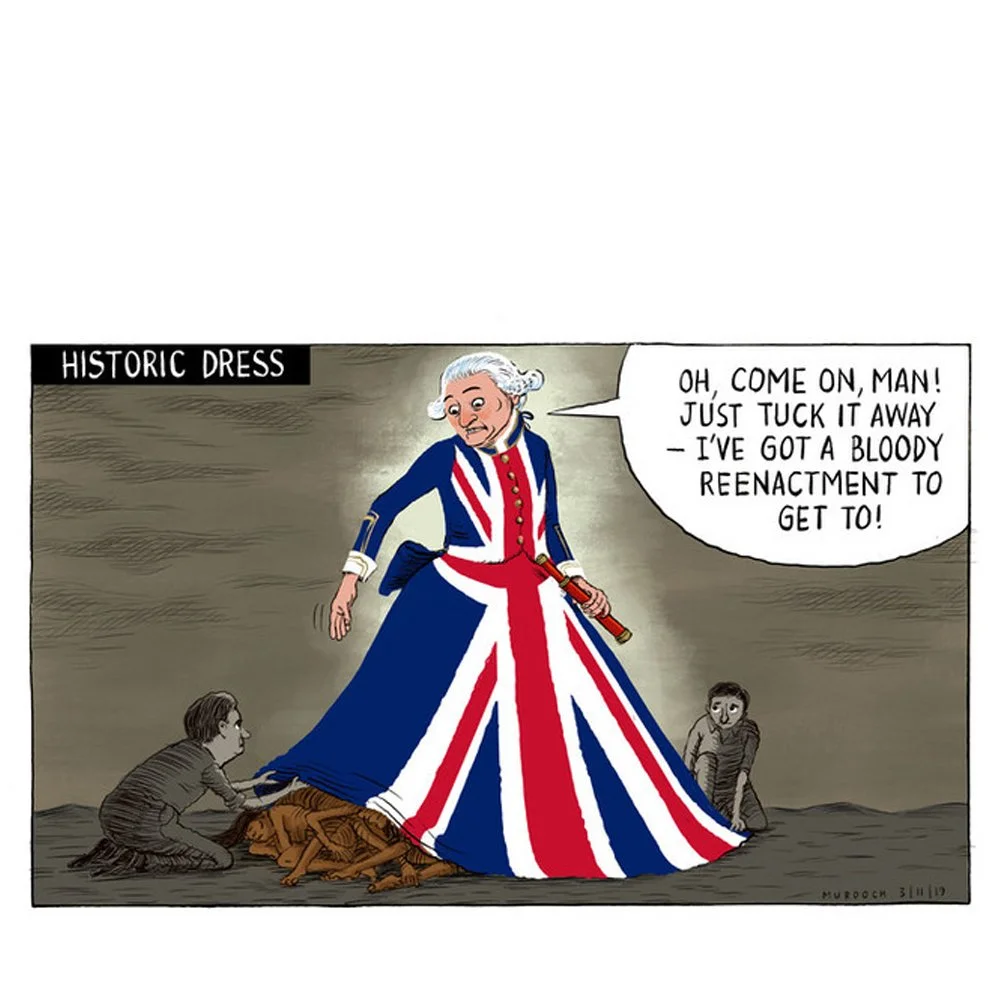
Placeholder image above by Sharon Murdoch/Stuff (2019).
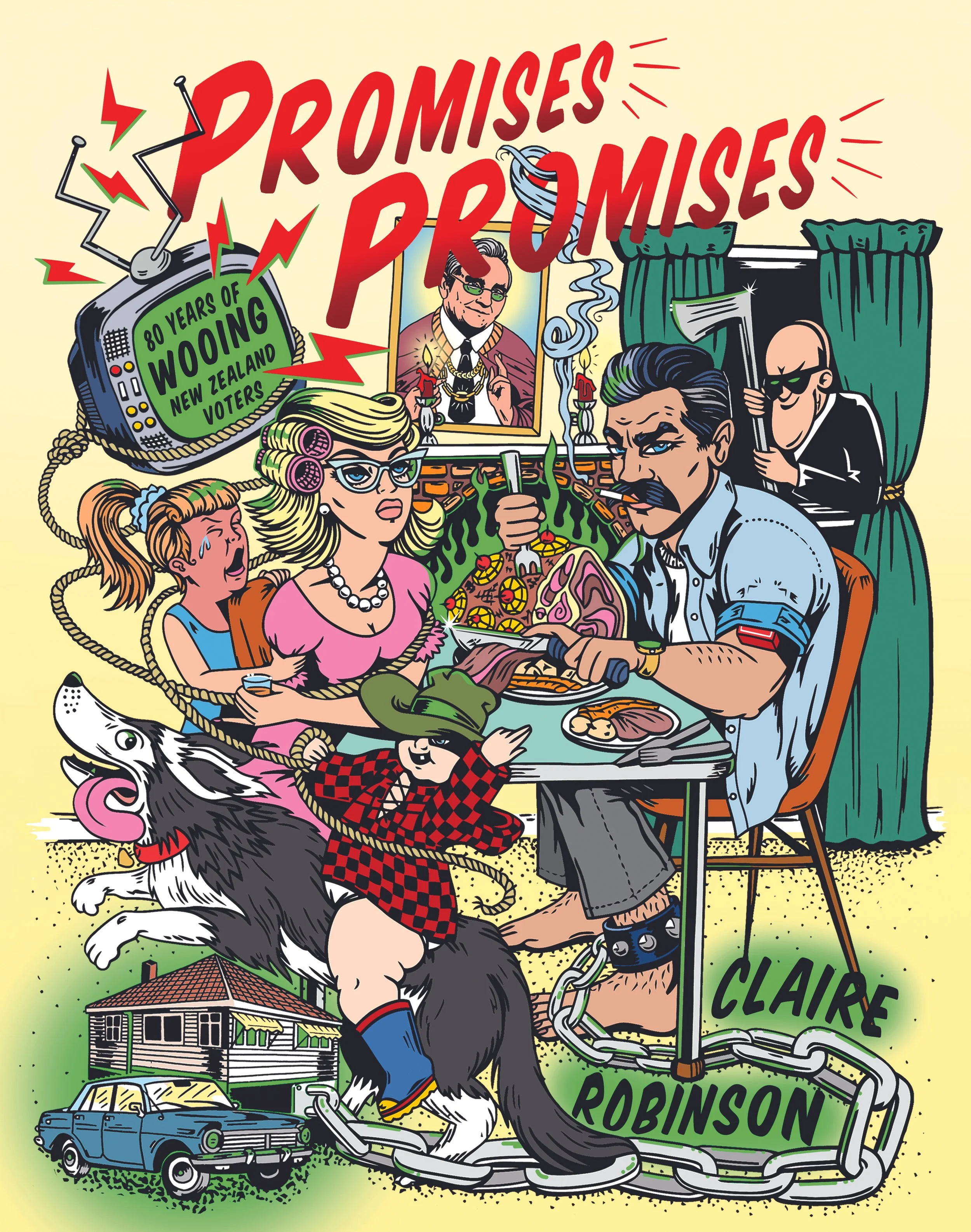
Promises Promises: 80 years of Wooing New Zealand Voters
Massey University Press
2019
Political ads are not simply visual records of the voters and issues valued by political parties in single election campaigns. They are also protagonists in the creation of our broader political culture. This book tells the story of how political ads have been strategically deployed by those in power to maintain political power in New Zealand over the period from 1936-2017. It raises awareness of the political-cultural embeddedness of current political priorities, something that needs to be better appreciated if we are to understand why our political system is failing to meet the needs of everyone, everywhere in twenty-first-century New Zealand.
Rich with still and moving image ads from 27 elections spanning the period 1938-2017.
The Lee Letter
Playscript
2021
New Zealand's most beloved Prime Minister Michael Joseph Savage would rather die than let his nemesis, popular socialist Labour MP John A. (Jack) Lee, become a Cabinet Minister. Set during the turbulent 1935-40 period, THE LEE LETTER explores the deadly power struggle between an increasingly unstable and medication reliant Savage and his “frenemy”, popular socialist Lee. A dramatisation based on real events, characters and verbatim accounts, THE LEE LETTER is an unexpectedly Machiavellian story of power and revenge inside the first Labour government, with many parallels in contemporary politics.
A play for 5-6 actors. Contact Claire below if you’d like to stage it.
Here’s a link to Claire speaking with Kim Hill on RNZ before its first reading at Circa Theatre: https://www.rnz.co.nz/national/programmes/saturday/audio/2018786411/claire-robinson-savage-politics

Grey is a Feminist Issue
Book Chapter in Journal of Urgent Writing
Massey University Press
2016
Grey hair means different things depending on your gender. On men, it signals authority, wisdom and sex appeal – think George Clooney, or the grey-haired judges and CEOs who face no scrutiny for looking their age. On women, it signals decline. Female newsreaders, cabinet ministers and executives keep dyeing, not from vanity but from necessity: the data shows mature women with grey hair still struggle with credibility in many corporate contexts.
This essay argues that ageing isn't really the issue. Control is. Keeping women dyed and youthful-looking has long kept them invisible in institutions run by men who are allowed to look their age. The fix isn't telling women to stop dyeing their hair – it's making grey hair on women as unremarkable as it already is on men.