Stop Acting Like the Opposition: Why National is its Own Worst Enemy
Like him or loathe him, Jeff Bezos built an empire on a single, ruthless discipline — focus obsessively on the customer, not the competition.
It's a lesson the National Party would do well to learn. Instead, it is governing like a party that has already decided its competitors are going to win the next election — and is doing its level best to help them.
Last week I wrote about how difficult the 2026 election was shaping up to be for National in a political environment where it is already behind Labour on several key indicators. But difficult is not the same as lost. Odds can be beaten with self-belief and a disciplined approach. Nine months out, National still has time — if it stops wasting it.
In business-speak, National is still the market leader. It heads the government. It won the highest proportion of the party vote at the last general election. It inherited a weakened opposition and a clear mandate. In political terms, that is as good a starting position as any party could ask for.
Like Amazon at its best, National should be obsessively focused on delivering to its voters. It should be innovating on its core product, shoring up its weaknesses before competitors can exploit them, and projecting the kind of stability that makes vote switching seem unthinkable.
As simple as selling soap?
Christopher Luxon should know this. He spent years at Unilever selling soap. He knows that if you spend all your marketing spend talking about how the rival detergent leaves streaks, people start wondering why your own clothes look so grey.
And yet scan any given week of National's communications and you’ll find a party far more animated by what its opponents are doing than by what it is doing itself.
The reason is obvious. National under-budgeted and over-promised on easing the cost-of-living crisis before the last election. It then conceded too much to its coalition partners after the election. But instead of admitting to these failings, which were 100% within its circle of control, National has opted to deflect blame onto its predecessors for the state of things in 2026 and to warn darkly about what a change of coalition would mean. But when a leader spends their energy cataloguing what competitors did wrong, they leave a vacuum where their own vision should be.
This obsession with the opposition is self-defeating. Every speech, newsletter, or social media post aimed at Labour, the Greens, and Te Pāti Māori doesn't marginalise these parties — it elevates them. It signals to voters that these parties are worth worrying about. National is governing like a challenger brand desperately trying to unseat an incumbent. Except it is the incumbent and voters are noticing.
Focused on what matters?
Luxon, to his credit, is at least trying to project stability. His communication style is disciplined to the point of being mechanical — a tightly controlled CEO persona built on efficiency, predictability, and managerial competence. Listen to any Luxon interview and you are guaranteed to hear several phrases on high-rotate: National is knuckling down. What I will say to you is. We're focused on what matters to New Zealanders. Through consistent messaging he’s trying to build trust, and trust is the foundation of a safe pair of hands-brand.
The risk is brand boredom. Worse, it's brand emptiness. Luxon's corporate experience, which should be a strength, has become a shield behind which the actual man is difficult to locate. Voters don't just want a Prime Minister who is a competent manager. They want one they can believe in. What does Luxon genuinely think? What drives him, beyond the talking points? Right now, nobody seems entirely sure.
In a telling interview at the end of 2025, Luxon whined to The Post that the news media underestimated his political skills and voters didn’t understand he was a man with a plan, breaking a cardinal political rule that a leader never blames his followers. Luxon has to earn voters’ respect; it doesn’t automatically come with the title of Prime Minister.
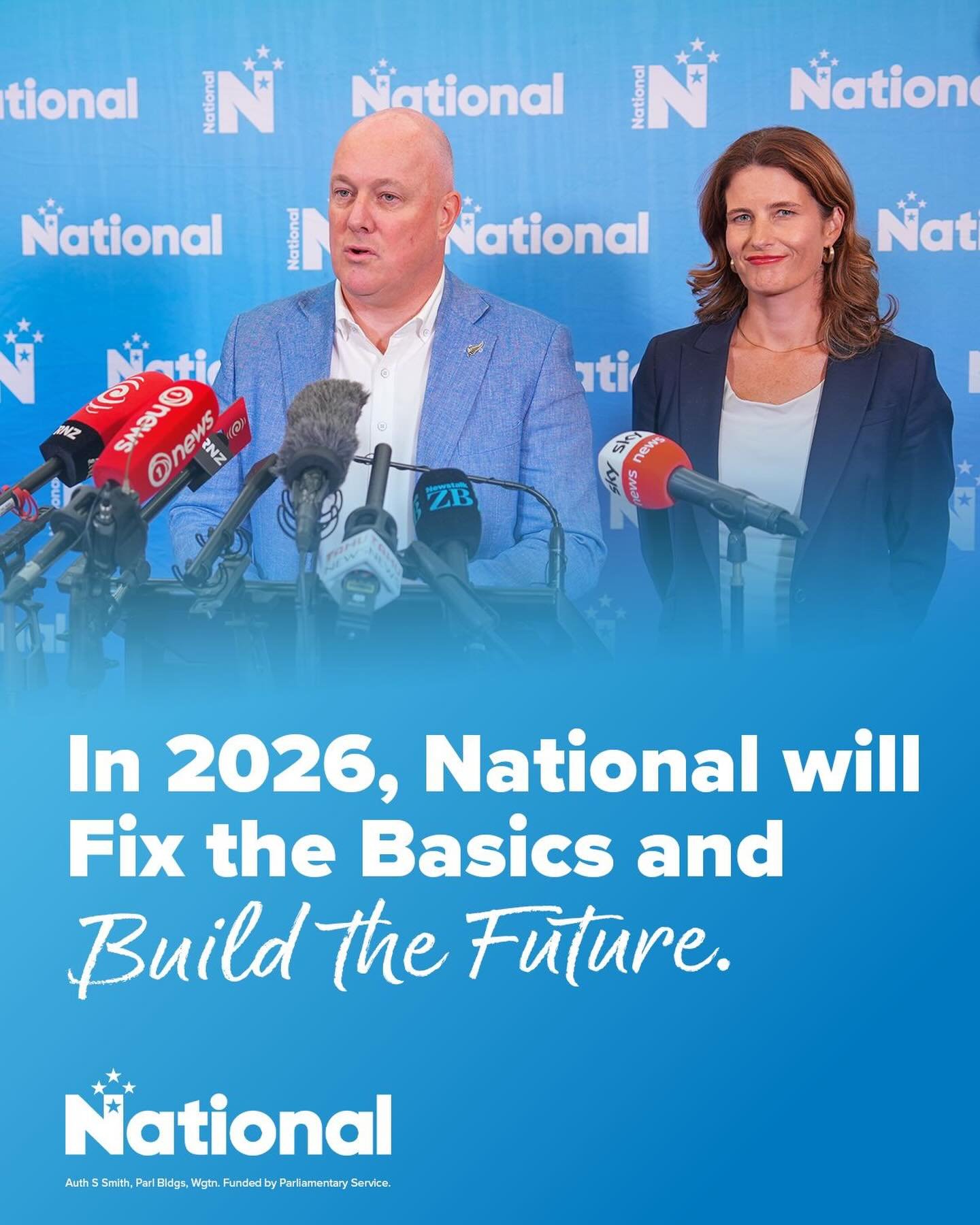
National Facebook Post 21 January 2026
The privileged saboteur
If Luxon's external communications problem is that he talks too much about his competitors, his internal problem is that both of his coalition partners are regularly off-message, one more so than the other, and facing no meaningful consequences for it.
As Foreign Minister, Winston Peters is New Zealand’s voice abroad. Domestically, he functions more like a saboteur operating to destabilise NZ Inc internally.
The pattern is consistent and corrosive. Peters uses his personal social media to bypass official channels and advance positions that directly contradict government policy. He uses parliamentary privilege to call people names no-one else could get away with outside the House.
In January on social media, Peters rebuked the new governor of the Reserve Bank Dr Anna Breman for not having sought MFAT advice before she signed a letter alongside the world’s most important central bankers confirming central bank independence. Peters’ post prompted the Prime Minister and Minister of Finance to publicly admonish Breman for what was a minor technicality. It made Luxon and Willis look thin-skinned and reactionary.
Not a month later, Peters avoided MFAT advice himself when he called the World Health Organisation ‘a bunch of unelected globalist bureaucrats [who] are not accountable or responsible with worldwide taxpayers (sic) money’ and implied that New Zealand should follow withdrawal from the WHO after Donald Trump left it.

Winston Peters X Post 23 January 2026
It was left to former New Zealand diplomats to call out this inappropriate behaviour, only for them to be castigated in parliament by Peters who, protected by parliamentary privilege and using the ‘royal we’ implying he was speaking for the whole government, said:
We don’t take lectures on foreign policy from has-been, irrelevant former pinko communists or from politicians who thought nothing of letting New Zealand’s national interest be torched by their inherent anti-Americanism.
These are only two examples of many. Luxon's response has been to carry on regardless, mopping up the mess with the weariness of a man who has decided that a rogue Foreign Minister is simply one of the weather events of modern governance.
It is not. It is a choice.
Peters’ leverage and poll support only exists because Luxon flinches, and it is costing National voters.
Marketing theory suggests you ignore niche external competitors because engaging with them only gives them oxygen. But Peters isn’t an external competitor — he is inside the tent, poking large holes so the rain can pour in on Luxon.
In the eyes of voters, a Prime Minister who cannot manage his own Foreign Minister eventually stops looking like a Prime Minister. Luxon's entire brand proposition — managerial discipline, stability, competence — is being dismantled from within.
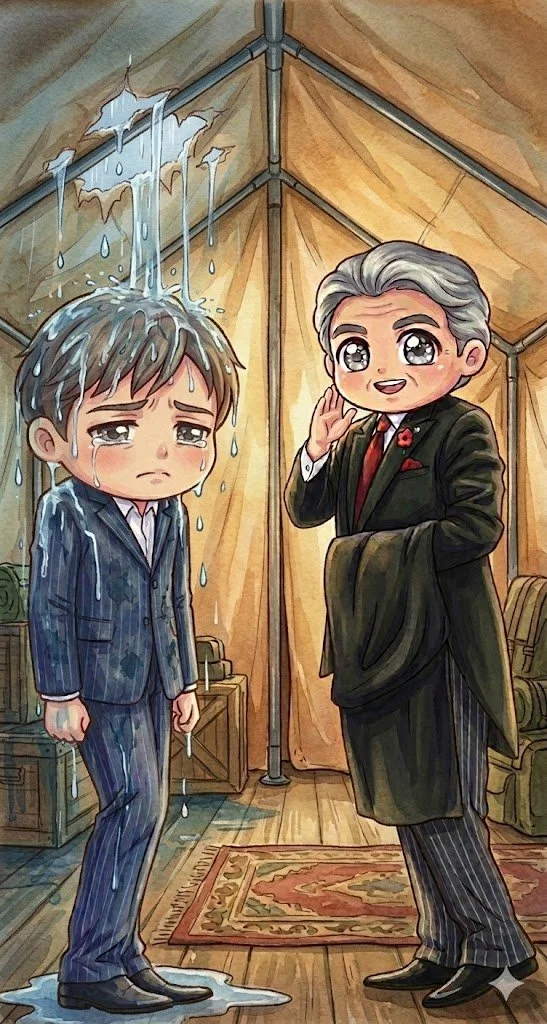
Generated by Gemini
Core National voters did not sign up for NZ First's agenda. They did not vote to watch their party's policy platform bartered away in a coalition that sometimes appears more focused on not upsetting Winston Peters than on losing voters.
So, what should National do? The answer is simple, if not easy:
Govern like a leader. Ignore the opposition and focus relentlessly on National’s own agenda — what it is building, not what it inherited. The opposition is irrelevant until you make them relevant.
Humanise Luxon: Get him out in front and alone, not flanked by other Ministers, unscripted enough to seem human but prepared enough to seem competent. Tell a story about New Zealand's economic future that is vivid and believable, not a rehashed key message.
Draw the line clearly and publicly: Set the guardrails as to what Peters can only say when using his Minister of Foreign Affairs/government banner on social media and what he can say as leader of New Zealand First.
New Zealanders didn't vote National in to act like a junior partner in its own government; they voted National in to improve their lives. Every week spent looking sideways at opponents — while being undermined from within — is a week wasted on the wrong brief.
Next week: Labour. The 2026 Election is theirs to lose
Kia pai tō wiki